A design that looks every bit the part of a professional card game
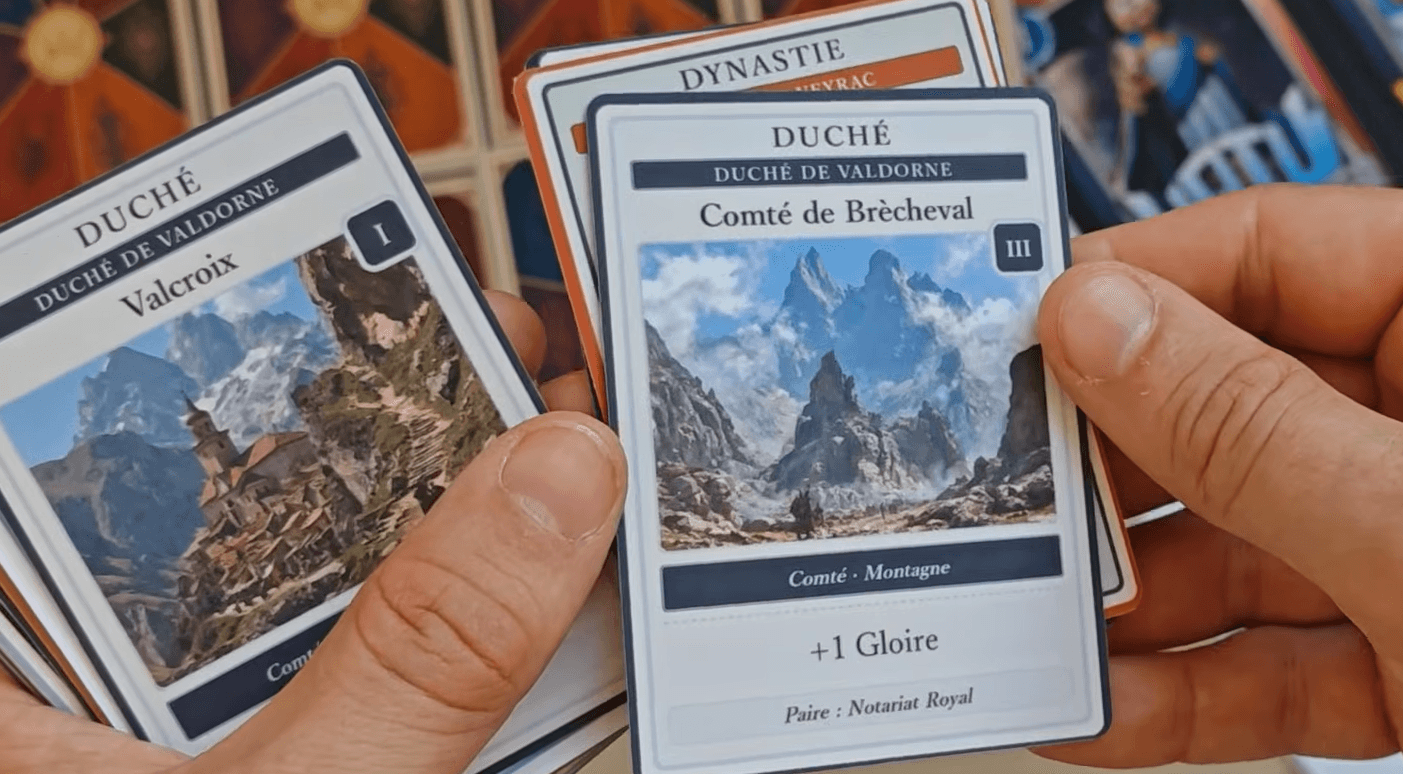
When I saw the ‘Conseil du Roi’ cards arrive in the orders, I was delighted! Delighted, because I’m absolutely blown away by the quality of the artwork and the layout of the cards, which is very clear and easy to read. I invite you to watch the video to see for yourself the quality, consistency and variety of the card artwork.
Beyond the design, the way the information on the cards is prioritised and structured makes the whole thing very clear and easy to read, which helps players understand the game. You might not realise it, but managing to fit so much information onto a 6.3 × 8.8 cm card, in a clear and coherent way, without overwhelming the player with information, is the hallmark of a quality game!
A card game with a genuine backstory
But beyond its stunning art direction, *Le Conseil du Roi* also offers a fully realised world with a number of background elements that provide a solid foundation for its gameplay.
In a kingdom weakened by its sovereign’s advancing age, seven great Houses are already vying for power in the post-King era. Alliances, marriages, intrigues, hostage-taking and power struggles punctuate the final years of the reign. One question remains: when the King dies, which House will have amassed enough Glory to rise to the top of the kingdom?
A brief description of the gameplay
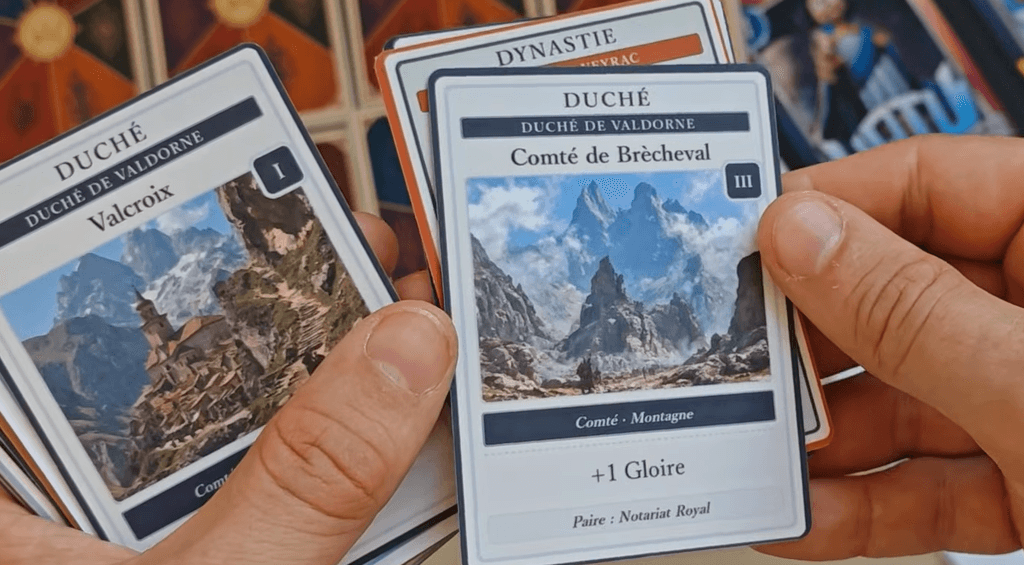
The King’s Council is a game of collection, deduction and negotiation for 3 to 7 players, which reimagines the familiar concept of the ‘Seven Families’ game within a world of medieval intrigue.
As the game progresses, players seek to gather the cards they need whilst trying to work out what their opponents are hiding. Observation, memory, bluffing and negotiation become essential for building their House’s influence without revealing too much of their intentions.
To accumulate Glory, the Houses form Families of Influence, take control of Duchies and, above all, vie for the various seats on the King’s Council, which grant precious powers to those who manage to hold on to them.
Political marriages, the exchange of nobles held hostage and rivalries between Houses further upset the balance of power. But all must also contend with the crises afflicting the kingdom: famines, wars, epidemics, revolts or political unrest may force adversaries to cooperate… or to let others pay the price.
And time is running out. As the rounds pass, the King’s health deteriorates and his death becomes increasingly likely. No one knows exactly when the game will end.
When the King finally breathes his last, the House that has accumulated the most Glory wins.